




Continence support under Support at Home: personal care or clinical care?

Continence support is personal, so it needs to be planned clearly. That may include knowing when support is usually needed, what products or continence aids are used, how the person prefers to be assisted and whether there are any skin, mobility or hygiene concerns to monitor.


Table of Contents
Continence support can mean different things depending on what a person needs.
For some older people, it may be practical day-to-day help with toileting routines, hygiene or changing continence pads. For others, it may involve nursing support, clinical checks or advice from a qualified health professional.
Under Support at Home, this distinction matters because different types of support can sit in different service categories.
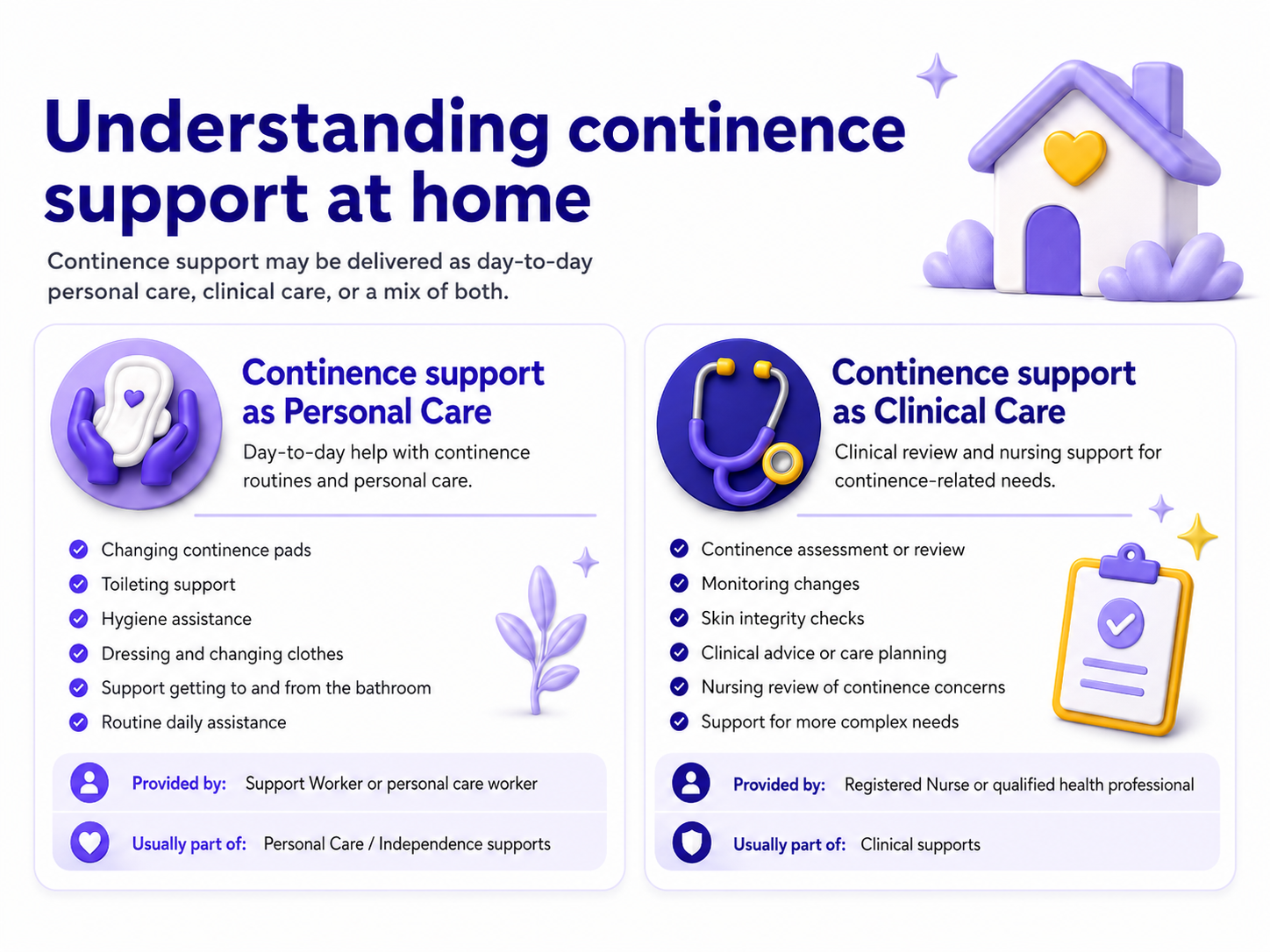
Put simply, continence support may be part of personal care, or it may be part of clinical care.
Both can play an important role. They just support the person in different ways.
Continence support as personal care
Continence support may sit under personal care when the person needs hands-on assistance with daily routines.
This may include support with:
- changing continence pads
- toileting routines
- hygiene and skin care as part of daily care
- dressing or changing clothes
- getting to and from the bathroom safely
- feeling clean, comfortable and supported during the day
This type of continence support is practical and personal. It is about helping the person manage daily routines with dignity, comfort and consistency.
Under the Support at Home service list, continence management, non-clinical, sits within personal care under the Independence category. Personal care also includes assistance with self-care and activities of daily living.
This type of support may be provided by a trained Support Worker as part of their usual care routine, depending on the person’s care plan and needs.
Clinical continence care
Clinical continence care is different.
This may involve a Registered Nurse or another qualified health professional providing continence-related assessment, monitoring or clinical support.
For example, clinical continence care may include:
- reviewing continence needs
- monitoring changes
- checking skin integrity
- providing clinical advice to the care team
- supporting continence-related care planning
- identifying when further assessment may be needed
This type of support looks at continence from a clinical perspective. It may be needed when there are health concerns, changes in continence, skin issues, complex needs or a need for regular nursing review.
Under Support at Home, services are grouped into three categories: Clinical supports, Independence services and Everyday Living services. Clinical supports are fully funded by government, while participants contribute to Independence and Everyday Living services based on their assessed contribution arrangements.
Why the difference matters
The difference matters because it helps everyone understand who should provide the support, how it should be planned and how it may be funded.
A person may need practical help each day, clinical review or both.
For example, a Support Worker may help with pad changes, hygiene and toileting routines as part of personal care. A Registered Nurse may also visit to review continence needs, check for changes or provide clinical guidance.
These supports can work together. The personal care support helps with the everyday routine. The clinical support helps review what is happening from a health perspective and whether anything needs to change.
When both sides are understood clearly, care can feel more coordinated and appropriate to the person’s needs.
Supporting dignity and comfort at home
Continence support is personal, so it needs to be planned clearly.
That may include knowing when support is usually needed, what products or continence aids are used, how the person prefers to be assisted and whether there are any skin, mobility or hygiene concerns to monitor.
For day-to-day personal care, this might mean a Support Worker helping with toileting routines, changing pads, hygiene, dressing and keeping the person comfortable during the day.
For clinical continence care, it may mean a Registered Nurse checking changes, reviewing skin condition, monitoring concerns or helping update the care plan when needs change.
The important thing is knowing which type of support is needed, who is responsible for providing it and when a clinical review may be required.
This helps the person receive continence support that is clear, appropriate and consistent at home.
Questions to ask your provider
If continence support is part of your care needs, it is worth getting clear on what type of support is required and how it will be delivered.
You may want to ask:
- Is this support considered personal care or clinical care?
- Who will provide the support: a Support Worker, Registered Nurse or another health professional?
- Is a nurse review needed before services begin?
- What continence products or aids will be used, and who is responsible for organising them?
- How will the support be included in the care plan?
- What should the Support Worker monitor during daily care?
- What changes should be reported to the care team or nurse?
- How will privacy, comfort and routine be maintained?
- Will a participant contribution apply?
- How will the support be reviewed if continence needs change?
These questions are useful because continence support can involve both daily routines and clinical oversight.
For example, changing pads or assisting with toileting may be part of personal care. But changes in skin condition, discomfort, increased frequency, leakage, changes in urine or bowel habits, or new concerns may need clinical review.
Getting this clear early helps everyone understand their role. It also makes it easier to know when something is part of routine support, and when it needs to be raised with a nurse or care team.
Continence support with Leora Healthcare
At Leora Healthcare, we can help identify whether continence support needs to be delivered as day-to-day personal care, clinical nursing support or a mix of both.
For daily routines, this may include support with toileting, changing continence aids, hygiene, dressing and getting to and from the bathroom safely.
If clinical input is needed, our nursing team can help review continence needs, monitor changes, support care planning and guide the broader care team on what to look out for.
This gives clients and families a clearer understanding of who is providing each part of the support and how it fits within the person’s Support at Home care plan.
We also take support matching seriously, especially for personal care. Having a Support Worker who is respectful, consistent and well-briefed can make daily support feel easier and more familiar.
If you or someone you care for needs continence support at home, speak with Leora Healthcare. We can help you understand the type of support needed and how it can be arranged as part of your care.
***
FAQs
What is continence support under Support at Home?
Continence support under Support at Home may include practical help with toileting routines, hygiene, changing continence pads or clinical support from a nurse or qualified health professional.
Is continence support personal care or clinical care?
It depends on the type of support needed. Day-to-day help with pads, hygiene or toileting routines may sit under personal care. Nursing review, monitoring or clinical advice may sit under clinical care.
Can a Support Worker help with continence care?
Yes, a Support Worker may help with non-clinical continence support as part of personal care, depending on the person’s care plan and approved services.
When is a nurse needed for continence support?
A nurse may be needed when continence needs require clinical review, monitoring, skin checks, care planning or assessment of changes.
Can Leora help arrange continence support at home?
Yes. Leora Healthcare can help clients and families understand whether day-to-day personal care, clinical support or both may be needed, then plan care that supports dignity, comfort and wellbeing at home.